
COST OF LIVING & FINANCIAL FREEDOM
The Real Cost of Living in the Dominican Republic: Why It’s About More Than Prices
By Richard Regan |
When people ask me about the cost of living in the Dominican Republic, they usually want to know the same things. How much does it cost to rent a house? Are groceries cheaper? What about electricity, transportation, restaurants, and healthcare?
Those are reasonable questions, and the answers certainly matter.
But after living in the Dominican Republic for 14 years, I’ve come to believe that many cost-of-living comparisons overlook some of the most important financial advantages of living here.
The biggest savings aren’t necessarily found at the supermarket or the gas station. They can come from the taxes you pay, the insurance you carry, the type of home you own, and the financial obligations that become less significant when you choose a different way of life.
I moved here from Canada, where my wife and I had spent years working long hours. We had built a comfortable life, but like many Canadians, we were also carrying the considerable financial responsibilities that came with maintaining it.
Moving to the Dominican Republic changed far more than our address.
It changed the economics of our everyday lives.
1. Taxes: One of the Biggest Differences
When I compare the financial advantages of living in the Dominican Republic with living in Canada, taxation is one of the first things that comes to mind.
And I’m not just talking about personal income taxes.
Taxes influence nearly every aspect of our financial lives, from what we earn and spend to what it costs to operate a business and own property.
The Dominican Republic has a different tax system from Canada, and understanding that difference is essential when comparing the true cost of living.
Personal and Business Taxes
The Dominican Republic has a progressive personal income tax system, with rates ranging from 0% to 25% in 2026, depending on taxable income.
The standard corporate income tax rate is 27%, although a higher rate applies to certain very large businesses during specified tax years.
Those figures are important because the Dominican Republic isn’t a tax-free country. It has an established tax system, and businesses and individuals have legal obligations.
But the overall tax picture can be very different from what someone is accustomed to in Canada.
The Dominican Republic generally follows a territorial approach to income taxation, with specific rules governing foreign-source income and investment earnings. Residency, income sources, and business structure all matter.
For someone relocating from Canada, there is another important consideration: Canadian tax residency doesn’t automatically end simply because you’ve moved abroad. That needs to be addressed properly.
In my own life, the difference in overall taxation has been substantial.
Having operated a real estate business in the Dominican Republic for 13 years, I’ve seen firsthand how the financial environment differs from the one I left behind.
Property Taxes: Another Significant Saving
One of the biggest financial differences I’ve experienced between owning property in Canada and owning property in the Dominican Republic is the annual property tax.
In Canada, property taxes can represent a substantial recurring expense, particularly when you own a higher-value home. And those taxes continue regardless of whether you have a mortgage.
The Dominican Republic has a very different system.
For 2026, the annual property tax, known as IPI (Impuesto al Patrimonio Inmobiliario), is generally 1% of the combined taxable value of an individual’s qualifying real estate holdings above RD$10,695,494 — approximately US$174,000 at the exchange rate on October 22, 2026.
Properties below that threshold may have no IPI liability, and certain exemptions also apply.
That is an important distinction: the tax is not simply 1% of the entire market value of your home.
The taxable value is determined under the Dominican tax system, and the rules differ for property owned by companies or held in trusts.
For me, the savings compared with what I was accustomed to in Canada have been substantial.
And unlike a one-time saving on a purchase, lower annual property taxes can continue to benefit a homeowner for many years.
When you’re thinking about retirement or financial freedom, reducing recurring expenses like property taxes can make a meaningful difference to how much income you actually need.
The 18% Consumption Tax
The Dominican Republic also has a consumption tax called ITBIS (Impuesto sobre Transferencias de Bienes Industrializados y Servicios).
The standard rate is 18% on taxable goods and services.
This is similar in principle to the sales taxes Canadians are familiar with, although the exemptions and application differ.
For businesses, ITBIS is generally collected on taxable sales and remitted to the government, with applicable credits for qualifying tax paid on purchases. The final tax burden is generally borne by the consumer.
Not every product or service is subject to the full 18% rate.
What matters is understanding the complete tax system rather than comparing one isolated rate.
And when you’re thinking about where to spend the next chapter of your life, those differences can have a significant effect on your long-term finances.
2. Insurance: An Expense Worth Looking at Differently
Insurance is another area where I’ve noticed a substantial difference between living in Canada and living in the Dominican Republic.
In North America, we’re accustomed to insuring almost everything.
Our homes, vehicles, businesses, personal liability, and sometimes risks we may never have seriously considered.
Part of that reflects the cost of replacing property. Part reflects legal liability, lending requirements, and the way insurance is built into the financial system.
The Dominican Republic has a different environment.
There are still legal liabilities, accidents, disputes, and circumstances where insurance is essential. But the kinds of coverage people choose, the premiums they pay, and the risks they are willing to retain can differ.
Home Insurance Isn’t Always Treated the Same Way
One thing that surprises many North Americans is that some homeowners in the Dominican Republic choose not to carry comprehensive home insurance, particularly when they own their property outright.
That isn’t necessarily a decision I would recommend to everyone. A mortgage lender may require insurance, and homeowners need to consider their own exposure to fire, flooding, earthquakes, liability, and other risks.
But it raises an interesting question.
Why are insurance decisions sometimes different here?
A large part of the answer lies in how homes are built.
3. Concrete Construction Changes the Equation
Many homes in the Dominican Republic are constructed with reinforced concrete columns, beams, floors, and roofs, along with concrete-block walls.
That is quite different from the wood-frame construction common in much of Canada and the United States.
Concrete and masonry are noncombustible materials. They don’t burn in the same way as timber framing, which changes the nature of certain fire risks.
For example, a kitchen fire in a concrete home may destroy cabinets, appliances, finishes, and furnishings without necessarily consuming the entire structure.
Of course, a severe fire can still cause substantial damage, including damage to concrete and reinforcing steel. Construction quality, electrical systems, and the contents of a home all matter.
But the fundamental difference in building materials is real.
Gated Communities and Security
Many residential developments along the North Coast are gated communities with controlled access and security personnel.
I’ve spent much of my real estate career working with properties in these communities, and security is one of the features that attracts international buyers.
That doesn’t mean theft never happens. It does mean that the security arrangements of a particular community can influence how owners assess their risks.
When you combine reinforced-concrete construction, community security, and the financial position of someone who owns a property without a mortgage, you can begin to understand why homeowners sometimes make different insurance decisions here than they would in North America.
Those decisions can affect annual living expenses.
But they’re choices that should be made with a clear understanding of the risks, not simply because insurance is optional.
4. What About Hurricanes on the North Coast?
Whenever I talk to people considering a move to the Dominican Republic, hurricanes inevitably come up.
It’s understandable. When people hear the word Caribbean, they often imagine powerful hurricanes striking coastal communities every year.
But hurricane exposure isn’t identical throughout the Caribbean, or even throughout the Dominican Republic.
I live on the North Coast, in the Sosúa and Cabarete area.
And the historical record for this particular stretch of coastline is quite different from what many newcomers expect.
Looking at roughly the last century of recorded hurricane activity, the Puerto Plata–Sosúa–Cabarete coastline has not experienced the kind of direct hurricane-strength landfall that people often associate with the Caribbean.
That doesn’t mean hurricanes can’t affect the region.
Tropical storms, heavy rainfall, flooding, rough seas, and indirect impacts from offshore hurricanes remain genuine risks. Historical storm patterns are not guarantees about the future.
But geography and storm history are relevant when evaluating a property’s exposure.
The North Coast’s historical experience is one reason I believe buyers should look beyond general statements about Caribbean hurricane risk and examine the specific location where they intend to live.
For homeowners, that understanding can influence construction choices, maintenance planning, emergency preparedness, and insurance decisions.
5. Everyday Living Costs: Some Things Are Cheaper, Others Aren’t
Now let’s get back to the expenses that most people expect to see in a cost-of-living article.
Are everyday living costs lower in the Dominican Republic than in Canada?
They certainly can be.
But the answer depends heavily on how you choose to live.
Groceries and Local Food
One of the advantages of living here is access to locally grown tropical fruits, vegetables, and other fresh foods.
Local markets can offer excellent value, particularly when you’re buying seasonal produce.
But imported groceries are another story.
If you want the same packaged foods, specialty products, and imported brands you purchased in Canada, you may find yourself paying as much or even more.
That’s why I believe adapting to local living makes a difference.
The opportunity isn’t simply to recreate your Canadian shopping habits in a warmer country.
It’s to take advantage of what is available here.
Electricity and Air Conditioning
Electricity is one expense that can surprise newcomers.
Running multiple air conditioners throughout a large home can become expensive, particularly when combined with swimming-pool pumps, water systems, and other equipment.
In our own home, we’ve learned how much house size and design can influence ongoing costs.
The climate gives us an advantage, but only if we design our lives around it.
Covered terraces, natural airflow, ceiling fans, and well-planned outdoor spaces can reduce the need to air-condition large indoor areas all day.
Transportation and Imported Goods
Vehicles, fuel, and imported products aren’t necessarily bargains.
Import duties, shipping, and other costs can make certain purchases expensive.
A lifestyle that requires multiple vehicles, frequent long-distance driving, and a steady supply of imported goods can quickly erode some of the financial advantages of living here.
On the other hand, choosing a home close to the places you regularly visit can make life simpler and less expensive.
Restaurants and Entertainment
One of the pleasures of living on the North Coast is having a wide variety of restaurants, cafés, beaches, and outdoor activities nearby.
You can spend a great deal of money dining at upscale restaurants and enjoying resort-style entertainment.
Or you can have a wonderful day surfing, swimming, walking along the beach, or enjoying a meal at home with friends and family.
Much of what makes life enjoyable here doesn’t require a large entertainment budget.
And that brings me to something I’ve learned from my own experience.
6. The Biggest Financial Lesson I’ve Learned: Don’t Buy More House Than You Need
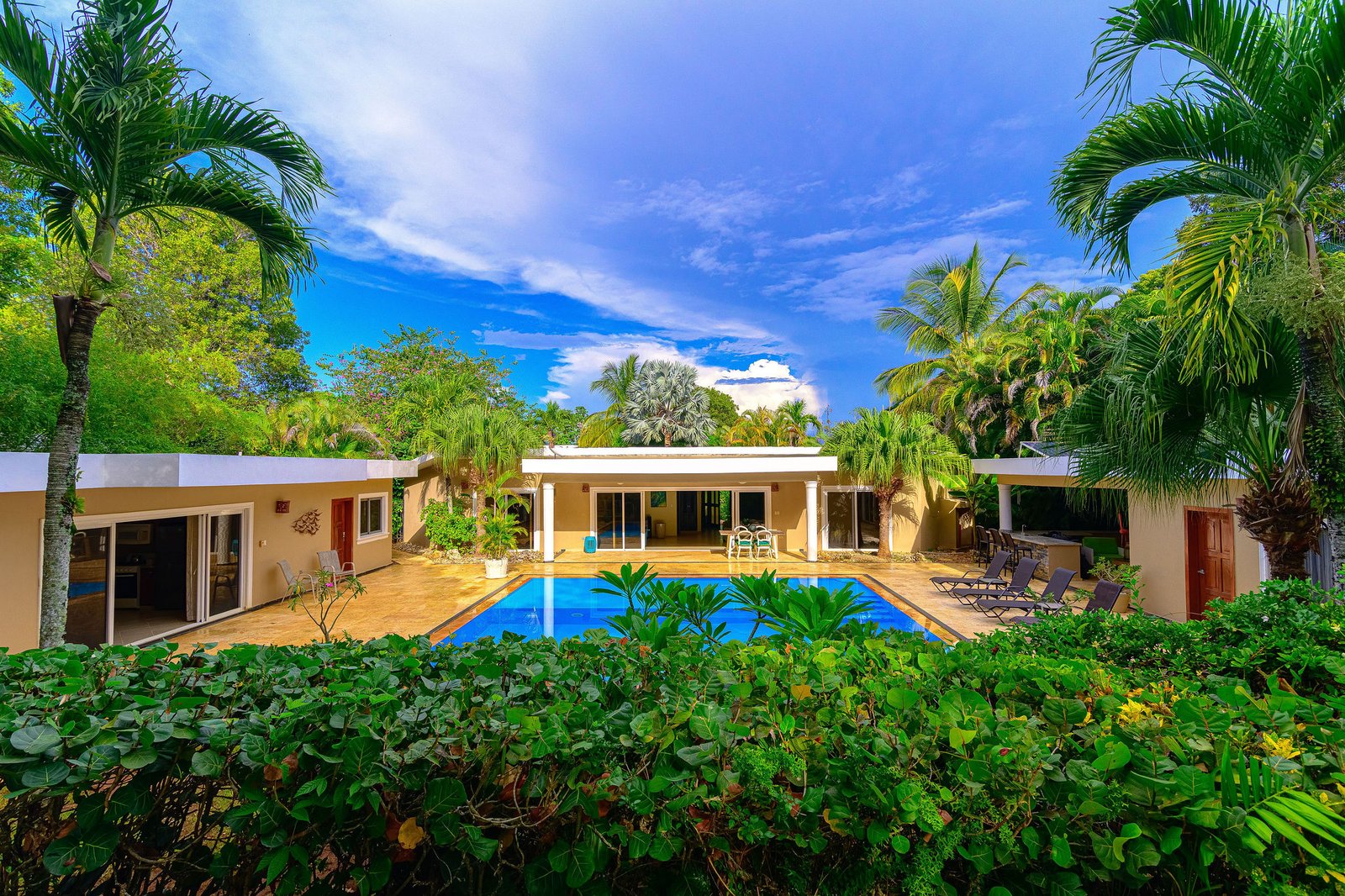
When we first came to the Dominican Republic, we purchased a large six-bedroom home.
It was originally intended as an investment property, and we expected to live elsewhere.
But circumstances changed, and we moved into the house before it was even fully completed.
It’s a beautiful property, and we’ve enjoyed living there.
But over time, I’ve come to appreciate something important about living in a tropical climate.
You don’t need as much indoor living space as you might in Canada.
In Canada, the weather often forces you indoors for much of the year.
Here, the opposite is true.
We spend an enormous amount of our time outside, particularly under covered terraces where we can enjoy the fresh air without sitting directly in the sun.
And that has changed the way I think about the ideal home.
My Next Home Will Be Smaller — by Choice
Our plan is to sell our current home and move into something considerably smaller.
Ideally, I’d like a comfortable two-bedroom home with two generous covered outdoor areas.
One would be an outdoor kitchen and dining terrace, with space for cooking, entertaining, and enjoying meals together.
The other would be a covered lounge area beside the swimming pool, where we could relax and spend time outdoors.
For our lifestyle, that would be far more useful than thousands of square feet of additional indoor space.
And think about the financial implications.
A smaller home can mean lower construction or purchase costs, less maintenance, fewer repairs, reduced electricity consumption, and less money tied up in property.
Those savings can be significant over time.
This is one of the lessons I often think about when helping clients purchase real estate in the Dominican Republic.
Someone selling an expensive home in Canada may arrive here and discover that they can afford a much larger property than they ever imagined.
It’s tempting.
But just because you can afford a large luxury villa doesn’t necessarily mean it’s the best choice for the life you’re trying to create.
The goal should be to find a home that fits your lifestyle, not simply to purchase the most impressive property your budget allows.
7. A Different Way of Doing Business and Living
Another difference newcomers notice is the Dominican Republic’s commercial culture.
Cash remains an important part of everyday transactions, particularly with smaller businesses, local markets, and independent service providers.
Electronic payments, bank transfers, and cards are also widely used, especially in more established businesses.
The country has its own way of doing things, and adapting to those differences is part of settling into life here.
There can be practical advantages to dealing directly with local suppliers and service providers, understanding local pricing, and avoiding unnecessary intermediaries.
At the same time, proper records, receipts, and compliance with applicable tax requirements remain important.
The broader lesson is that living here becomes easier — and often more economical — when you understand how the local economy works instead of expecting everything to operate exactly as it did back home.
8. The Real Financial Advantage Is Having More Choices
When people talk about financial freedom, they often focus on earning more money.
A higher salary. A bigger business. More investments.
Those things can certainly help.
But there’s another side to financial freedom that I believe deserves more attention.
What if you could reduce the amount of money you need to maintain a comfortable and fulfilling life?
What if your home cost less to maintain?
What if you could spend more time outdoors, enjoy fresh local food, and entertain friends without constantly spending money?
What if lower ongoing expenses allowed you to work fewer hours, pursue a business you genuinely enjoy, or spend more time with your family?
That’s where the Dominican Republic has made the biggest difference in my life.
It’s not that everything is cheaper.
It isn’t.
And it’s certainly possible to spend a fortune living here if that’s the lifestyle you choose.
But the opportunity to live comfortably with fewer financial obligations is very real.
For me, that opportunity has become more valuable with every passing year.
9. Is the Dominican Republic Right for Everyone?
No, and I wouldn’t suggest otherwise.
Relocating to another country involves much more than comparing monthly expenses.
You need to consider healthcare, schools, residency, language, cultural differences, employment or business income, and the lifestyle you want.
Someone who expects every service, product, and convenience to operate exactly as it does in Canada may find the transition frustrating.
And someone who depends on a particular employment income or requires specialized services needs to examine those practical realities carefully.
But for people who are open to a different way of living, the financial advantages can be substantial.
I know that because I’ve lived it.
Fourteen years ago, we left Canada looking for a different lifestyle.
What we found exceeded our expectations.
We discovered that enjoying life didn’t have to depend on constantly working harder, earning more, and accumulating more possessions.
Sometimes the greatest financial opportunity comes from needing less.
Final Thoughts: It’s About More Than the Cost of Living
When comparing Canada and the Dominican Republic, it’s easy to become absorbed in individual prices.
How much is a litre of milk?
What does a restaurant meal cost?
How much is the monthly electric bill?
Those comparisons have their place.
But they don’t tell the whole story.
Taxes, insurance, property ownership, construction methods, climate, and lifestyle choices all influence what it actually costs to live somewhere.
And sometimes the biggest financial advantages come from expenses you can reduce or avoid altogether.
After 14 years in the Dominican Republic, I no longer measure the benefits of living here simply by comparing prices with Canada.
I think about the freedom it has given us to make different choices.
To spend more time outdoors.
To enjoy a healthier, more active lifestyle.
To simplify our lives.
And to focus more on the things that really matter.
Because ultimately, the goal isn’t simply to make a living.
It’s to have a life worth living.
Richard Regan is a Canadian who relocated to the Dominican Republic in 2012. He has spent 13 years working in Dominican Republic real estate and shares his firsthand perspectives on relocation, lifestyle, financial freedom, and living differently on the Caribbean’s North Coast.